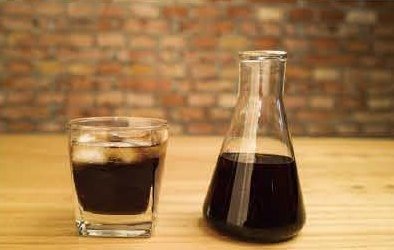
Caramel colour is priced per kg, but the per-kg number alone tells you very little. The price depends mainly on the class (I, III or IV), the colour strength, whether it is liquid or powder, special grades such as low 4-MeI, and the order size and shipping route. Shenzhen Phoenix Rising Technology supplies caramel colour Class I, III and IV from certified Chinese factories to food and beverage manufacturers in Bangladesh, and we always advise buyers to compare quotes by cost per tonne of finished product, not by price per kg.
We do not publish prices here, because they change with raw material costs and freight. Ask us for a current quote for your product.
What decides the price of caramel colour per kg?
Seven factors make most of the difference between two quotes.
| Factor | Why it changes the price |
|---|---|
| Class (I, III, IV) | Each class uses a different process and different reactants. Class IV for acidic soft drinks needs tighter control than plain Class I. |
| Colour strength | A stronger caramel gives the same colour at a lower dose. Stronger grades usually cost more per kg but can cost less per tonne of product. |
| Liquid or powder | Powder is spray-dried liquid. You pay for the drying and get less water, so powder costs more per kg but ships fewer kg. |
| Low 4-MeI grade | Class III and IV form 4-methylimidazole (4-MeI). Grades made to a low 4-MeI limit need extra process control. |
| Certificates | Halal, Kosher, FSSC 22000 / ISO 22000 / HACCP factories and full COA support are part of what you pay for. |
| Order size and packing | A full LC order and a small trial lot are priced differently. Packing type also adds cost. |
| Shipping route | Liquid caramel is heavier than water, so air freight is rarely sensible for large lots. Sea freight, port and C&F costs add to the landed price. |
The first two lines matter most: two "Class III liquid" quotes can differ simply because one is much stronger.
Which caramel colour class should you buy?
Caramel colour particles carry an electrical charge. If the charge of the caramel does not suit your product, the colour can form haze or sediment, especially in liquids. That is why the class matters more than the price.
| Class | E number | Common name | Typical uses |
|---|---|---|---|
| Class I | E150a | Plain caramel | Bakery, seasoning, some spirits and drinks |
| Class III | E150c | Ammonia caramel | Soy sauce, oyster sauce, noodles, bakery, beer, tapioca balls |
| Class IV | E150d | Sulfite ammonia caramel | Cola and other acidic soft drinks, some sauces |
A short rule of thumb:
- Soy sauce and salty sauces: usually Class III, which stays stable in high salt.
- Soft drinks: usually Class IV, which stays stable in acid. Class I is sometimes used.
- Bakery, biscuits and noodle seasoning: Class I or Class III, depending on the shade you want and whether it is a dry mix or a dough.
For a fuller comparison of the classes by application, see our sister site's guide on caramel colour for soy sauce, bakery and soft drinks. Our caramel colour product page lists which class suits each application.
Reference usage levels from the manufacturers
The dose you need is what turns a per-kg price into a real cost. These are the manufacturers' reference usage levels. They are starting points for a trial, not formulas.
| Application | Reference usage level |
|---|---|
| Instant noodles and seasoning | 0.50–5.00% |
| Bakery goods | 0.20–5.00% |
| Soy sauce | 0.50–35.00% |
| Soft drinks | 0.05–0.20% |
The soy sauce range is wide because dark soy gets much of its colour from caramel, while light soy needs very little.
How do you compare two caramel colour quotes fairly?
Never compare caramel colour by price per kg alone. Compare by what it costs to colour one tonne of your product. The method is simple:
- Fix a colour target. Take your current product, or a retained sample, as the standard.
- Run a bench trial with each sample. Add each caramel step by step until your test batch matches the standard under the same light.
- Record the dose. For example, Sample A matches at a certain percentage, Sample B at half that percentage.
- Calculate cost per tonne. Cost per tonne of product = price per kg × dose (as a decimal) × 1,000 kg.
- Add the landed cost. Include freight, duty and C&F charges per kg, because a weaker caramel means more kg to ship.
- Check stability. Keep the trial product for some days. Look for haze, sediment or colour change, especially in drinks and sauces.
If B is twice as strong as A, you use half as much, so B can be cheaper per tonne even at a higher price per kg.
How is colour strength shown on a COA?
Caramel colour strength is usually reported as colour intensity, measured as light absorbance at 610 nm (often written as K0.1 or "tinctorial power"), or sometimes in EBC units, especially for beer and malt products. Different factories may use different methods, so ask what method was used before comparing two COAs.
A useful COA for caramel colour should show:
- Colour intensity or EBC, with the test method
- Class, E number and pH
- Specific gravity and viscosity (liquid) or moisture (powder)
- 4-MeI (Class III and IV) and sulfur dioxide (Class IV)
- Heavy metals such as lead and arsenic
- Batch number, production date and shelf life
Ask for the COA of the exact sample you test, and ask that the bulk shipment matches that specification.
Liquid or powder: which costs less in the end?
Liquid caramel colour is the most common form. It mixes easily into soy sauce, drinks and wet doughs. It is cheaper per kg, but you pay to ship the water inside it.
Powder caramel colour suits dry mixes such as noodle seasoning, chanachur masala, soup powders and dry bakery premixes. It costs more per kg, but it is lighter for the same colour power and is easier to dose in a dry blend.
| Point | Liquid | Powder |
|---|---|---|
| Best for | Soy sauce, drinks, wet doughs, sauces | Seasoning, soup powder, dry premixes |
| Price per kg | Lower | Higher |
| Freight per unit of colour | Higher (water weight) | Lower |
| Storage in Bangladesh | Keep sealed, cool and out of sun | Keep sealed and dry; it absorbs moisture in humid weather |
In Dhaka and Chattogram's humid months, powder caramel can cake if bags are opened and left unsealed. Reseal after each use and store off the floor.
Do you need a low 4-MeI grade?
4-MeI (4-methylimidazole) forms during the making of Class III and Class IV caramel. Some export markets and some brand owners set limits for it. If you export, or supply a multinational brand, ask your customer what limit applies. Low 4-MeI grades are available, and we can source to the limit you need. Tell us that limit when you ask for a quote, because it affects the price.
For Bangladesh, check the current limits and approved additive lists with BFSA guidance and your C&F agent. Rules change, and this guide is not legal advice.
Small trial lot or LC order?
Most factories start with samples, then a small trial order, then a regular LC order. Phoenix Rising handles LC orders directly from China. For small quantities, DE International (Dhaka) can bring the goods door-to-door. Many factories also combine caramel colour with other ingredients such as HVP or soy sauce powder in one shipment to spread the freight. Our guide to importing food ingredients from China to Bangladesh explains each step.
When you ask for a quote, send:
- Your product (soy sauce, cola, biscuit, noodle seasoning and so on)
- The class and colour strength you use now, or a sample of your current caramel
- Liquid or powder
- Any 4-MeI or SO2 limit
- Monthly volume, and LC or small quantity
FAQ
What is the price of caramel colour per kg in Bangladesh?
There is no single price. It depends on class, colour strength, liquid or powder, low 4-MeI requirements, order size and shipping. Compare suppliers by cost per tonne of finished product, after a bench trial, and ask for a current quote for your product.
Which caramel colour is used in soy sauce?
Most soy sauce factories use Class III (E150c, ammonia caramel) because it stays stable in high salt. The manufacturers' reference usage level for soy sauce is 0.50–35.00%, depending on how dark the sauce should be.
Which caramel colour is used in soft drinks and cola?
Usually Class IV (E150d, sulfite ammonia caramel), which is stable in acidic drinks. The reference usage level in soft drinks is 0.05–0.20%. Run a stability test for haze before you change supplier.
Is a cheaper caramel colour per kg always cheaper to use?
No. A weaker caramel needs a higher dose and more freight. Calculate price per kg × dose to get cost per tonne of product, then add landed costs.
Where can a Bangladeshi factory buy caramel colour Class I, III or IV from China?
Shenzhen Phoenix Rising Technology supplies Class I, III and IV caramel colour, liquid and powder, Halal and Kosher, from FSSC 22000 / ISO 22000 / HACCP certified partner factories. Samples come with a COA. LC orders go through Phoenix Rising; small quantities come door-to-door through DE International in Dhaka. Our team speaks Bangla, English and Chinese. WhatsApp +880 1750-859967.