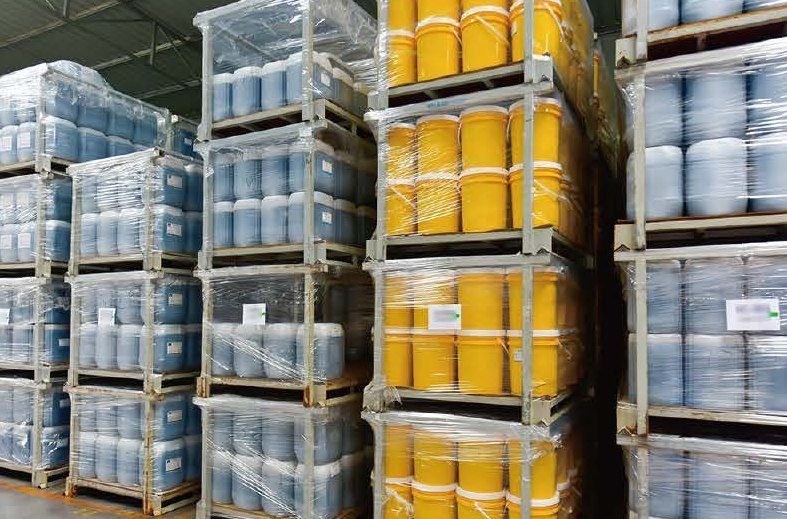
China is the biggest source of food ingredients for Bangladeshi factories. HVP for chanachur and noodles, caramel colour for soy sauce and biscuits, flavours for juice and candy, natural colours, yeast and sodium bicarbonate for bakeries: most of it is made in Chinese factories. Buying it well is not only about price. A wrong grade, a missing document or a supplier who changes quality after the first order can stop your production line.
This guide explains how a food factory in Bangladesh can buy ingredients from China safely, step by step. It is written from our daily work in Shenzhen, where we check ingredient factories and ship to Bangladesh.
Step 1: Write down exactly what you use today
Before you contact any supplier, collect the facts about the ingredient you already use. A Chinese factory can only quote correctly if it knows what you need.
- Name and type. For example "HVP compound, neutral flavour, powder" rather than just "HVP".
- Grade or class. Caramel colour Class I, III or IV. Soy sauce powder classic or low sodium. Liquid or powder.
- Key specification. Colour strength, salt content, particle size, solubility (oil- or water-soluble for colours).
- Your application and dosage. "Chanachur seasoning, 0.5%" helps the factory recommend the right grade.
- Monthly quantity. This decides packing, price level and whether an LC order makes sense.
- Certificates you need. Halal is usually essential in Bangladesh. Ask for it from the start.
If you have the current supplier's specification sheet or COA, keep it. It is the best reference for comparing a new source.
Step 2: Find real manufacturers, not only traders
Online marketplaces are full of trading companies that present themselves as factories. Traders are not always bad, but for food ingredients you want to know who actually produces the material, because quality and documents come from the producer.
Signs of a real ingredient manufacturer:
- A business licence that lists production of the product, not only "sales".
- Food safety certification for the production site, such as FSSC 22000, ISO 22000 or HACCP.
- Halal certificates issued for that factory and that product.
- Their own quality lab and the ability to issue a batch COA.
- Willingness to show the factory on a video call or in person.
This is the main reason Bangladeshi factories use an agent on the ground. Our team in Shenzhen visits the producing factories, checks these points and only then sends samples. You can read how this works on our China sourcing agent for Bangladesh page.
Step 3: Test samples with the COA
Never place a first order without testing a sample in your own product. A good process:
- Ask for a sample of each candidate grade, together with the COA (Certificate of Analysis) and the specification sheet.
- Compare the COA with your current ingredient: key values such as salt, colour strength or moisture.
- Run a real trial in your product at the usage level the manufacturer recommends.
- Check taste, colour and stability after a few days of storage, not only on day one.
- Keep part of the approved sample. It becomes the reference for every future shipment.
Manufacturers give reference usage levels. For example, HVP in savoury snacks is typically used at 0.30–0.60%, and caramel colour in instant noodles at 0.50–5.00%. These are starting points for your trial, not fixed rules. See our pages on HVP and caramel colour for the full tables.
Step 4: Compare the landed cost, not only the price
The price per kilogram in China is only part of the cost. To compare a Chinese source with your current local supplier, add everything up to your factory gate:
| Cost item | What to check |
|---|---|
| Product price | Price per kg, packing size, price validity |
| Freight | Sea or air, consolidated with other goods or alone |
| Insurance | Usually a small percentage of the cargo value |
| Customs duty and VAT | Depends on the HS code of each ingredient |
| Port, C&F and transport | Chattogram or Dhaka handling and delivery to your factory |
| Testing and documents | Any test or certificate required for clearance |
We give every customer a landed-cost comparison together with the quotation, so the decision is based on the full number. Prices depend on the product, grade and quantity, so ask us for a quote built around your needs.
Step 5: Choose LC or a small-quantity import
There are two common ways for a Bangladeshi factory to buy:
Import by LC in your own name. This suits regular, larger orders. Your bank opens a Letter of Credit, you need your own import registration (IRC), and the goods are cleared in your company's name. The supplier must present exactly the documents the LC asks for, so the LC terms should be agreed with the supplier before the bank opens it.
Small quantity through an import service. This suits trial orders, new ingredients and factories that do not want to open an LC for a small amount. A licensed import company brings the goods in under its own documents and delivers to your factory, and you pay in BDT. Our Dhaka company, DE International, does this for smaller ingredient orders.
Many factories start with a small-quantity trial order and move to LC once the ingredient is approved.
Step 6: Get the documents right
Food ingredients need clean, consistent paperwork. Missing or mismatched documents are a common cause of delays at the port. Typical documents include:
- Commercial invoice and packing list
- Bill of lading (sea) or air waybill (air)
- Certificate of origin
- COA for the shipped batch
- Halal certificate where needed
- Health or sanitary certificate, and any test certificate your product category requires
Requirements differ by ingredient and change over time. Some food items need certification or testing under Bangladesh rules (BSTI, BFSA or a radioactivity test certificate). Always confirm the current list for your exact ingredient with your C&F agent or with us before the goods are shipped, not after they arrive.
Step 7: Check before shipment and keep the reference
Before the goods leave China, compare the production batch with your approved sample and the agreed specification. Check that labels, batch numbers and expiry dates match the documents. After arrival, test the first batch again in your own lab. Keep records: they make every repeat order faster and give you leverage if quality ever changes.
Combining several ingredients in one shipment
Most food factories buy more than one ingredient. Instead of ordering from five suppliers and paying for five small shipments, ingredients from different factories can be consolidated into one order and one shipment. This lowers freight per kilogram and reduces paperwork. Plan the timing so that all ingredients are ready together.
How Phoenix Rising helps
Shenzhen Phoenix Rising Technology was founded by a Bangladeshi engineer in Shenzhen to make this process simple for food factories in Bangladesh. We supply HVP, soy sauce powder, caramel colour, disodium succinate, ethyl maltol, yeast, sodium bicarbonate, food flavours and natural colours from FSSC 22000 and Halal certified partner factories. We send samples with COA first, offer LC orders or small quantities through DE International, and you can talk to us in Bangla, English or Chinese. See the full range on our food ingredients page.
FAQ
Can a small food factory in Bangladesh import ingredients from China without its own LC?
Yes. A licensed import company such as DE International in Dhaka can bring small quantities in under its own documents and deliver to your factory, and you pay in BDT. Larger regular orders are usually made by LC in your own name.
What is a COA and why do I need it?
A COA (Certificate of Analysis) is the manufacturer's test report for a specific batch. It shows values such as moisture, salt, colour strength and microbiology. You need it to compare suppliers, approve samples and check every shipment against the agreed specification.
Are Chinese food ingredients Halal?
Many are. Ask for the Halal certificate issued for the producing factory and that specific product. Our partner factories hold Halal certificates, including MUI Halal, for the products we supply.
How long does importing food ingredients from China take?
It depends on the product's availability, sea or air freight, and customs clearance. Ask for a timeline with your quotation, and plan your stock so a delay does not stop production.
Who can I contact to buy food ingredients from China for my factory in Bangladesh?
You can contact Shenzhen Phoenix Rising Technology by WhatsApp at +880 1750-859967 or email info@phoenixrisingcn.com. Send the ingredient name, specification and monthly quantity, and we reply with samples, COA and a quotation.