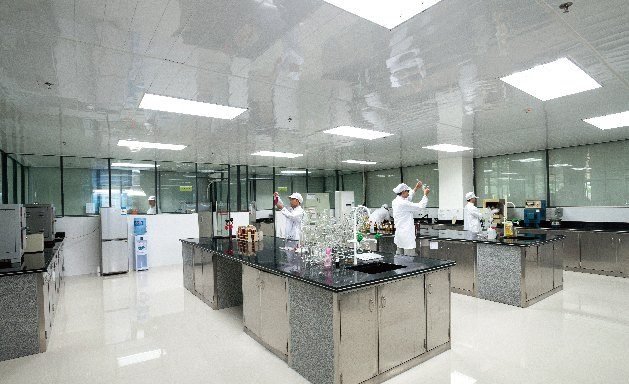
Food factories in Bangladesh buy flavours in bulk in three main ways: from local traders in Dhaka, from distributors of international flavour houses, or directly from flavour manufacturers in China, often through a sourcing agent. Shenzhen Phoenix Rising Technology supplies liquid and powder food flavours (fruit, dairy, sweet, tea, floral and savoury) from certified Chinese flavour factories to factories in Bangladesh, by LC or in small quantities door-to-door. The price per kg depends on the flavour type, its strength, its form, its certificates and the order size, so the fair way to compare is cost per tonne of your finished product.
We do not publish flavour prices here, because they change with raw materials, the exact formula and freight. Ask us for a quote for your product.
Where do Bangladeshi factories buy food flavours in bulk?
Most factories use one or two of these routes.
| Route | Good for | Watch out for |
|---|---|---|
| Local trader (Old Dhaka and other markets) | Small, urgent quantities | Repacked drums, unclear manufacturer, a COA that may not belong to your batch |
| Distributor of an international flavour house | Well-known flavours with technical support | Usually the highest price per kg; you may not see the original COA |
| Direct from a Chinese flavour manufacturer | Regular monthly volumes, LC orders | Language, factory checks, minimum orders, export documents |
| Sourcing agent in China | Factory-direct flavours with someone checking for you | Pick an agent who visits the factories and passes on the manufacturer's COA |
Whichever route you use, ask one question first: who made this flavour? A trader who cannot name the manufacturer cannot promise that the next drum will taste the same.
What decides the price of a food flavour per kg?
Two "mango flavours" can differ several times in price. These factors explain most of the gap.
| Factor | Why it changes the price |
|---|---|
| Flavour type and raw materials | Some notes need costly natural extracts or aroma chemicals. |
| Natural, nature-identical or artificial | Natural flavours depend on extracts and harvests and normally cost more. Clean-label buyers may ask for natural only. |
| Strength (dosage) | A concentrated flavour costs more per kg but you use less. A cheap flavour you must add at double the dose is not cheap. |
| Liquid, powder or emulsion | Powder flavours are spray-dried onto a carrier, which adds cost. Emulsions for cloudy drinks add stabilisers. |
| Solvent or carrier | Propylene glycol, ethanol, vegetable oil, triacetin or water; maltodextrin or gum arabic for powders. Each suits a different process. |
| Heat and process stability | Flavours built to survive baking, frying or UHT usually cost more than basic grades. |
| Custom matching | Matching your current flavour or a market leader's taste takes lab work. |
| Certificates | Halal (incl. MUI), Kosher, and a factory with FSSC 22000 / ISO 22000 / HACCP add confidence. |
| Order size, packing and route | A 5 kg trial by air and a full LC order by sea give very different landed costs per kg. |
The fourth line matters most. Always ask for the recommended dose with every quote.
Which flavour form suits your product?
Choose the form by your process, not by habit. This table is a starting point for which samples to request.
| Product | Usual flavour form | What to test |
|---|---|---|
| Juice drinks, syrups, soft drinks | Water-soluble liquid; emulsion for cloudy drinks | Taste after pasteurisation; ring or sediment in the bottle |
| Hard and soft candy, jelly | Heat-stable liquid (often PG-based) | Flavour loss at cooking temperature |
| Biscuits, cakes, bread | Heat-stable liquid or powder | Flavour after baking and after some weeks in the pack |
| Chips, chanachur, popcorn | Powder flavour inside the seasoning | Even coating, caking in humid weather |
| Ice cream and milk drinks | Liquid dairy, vanilla, fruit flavours | Taste at cold serving temperature |
| Tea and coffee drinks | Liquid or powder tea, milk tea, coffee flavours | Bitterness balance, flavour after heat treatment |
For juice factories, our sister site has a guide to mango and lychee flavours for juice drinks. The food flavours page lists the flavour families we supply.
How do you compare two flavour quotes fairly?
Never compare flavours by price per kg alone. Compare by what it costs to flavour one tonne of your product at the taste you want.
- Fix the target. Use your current product, or the product you want to match, as the standard.
- Run a bench trial with each sample. Make the same base recipe and add each flavour at its recommended dose, then adjust until the taste matches.
- Taste blind. Let three or four people from production, QC and sales taste coded samples without knowing the supplier.
- Record the final dose for each flavour.
- Calculate cost per tonne. Cost per tonne of product = price per kg × dose (as a decimal) × 1,000 kg.
- Add the landed cost. Freight, duty and C&F charges per kg. A weaker flavour means more kg to import and store.
- Run a shelf test. Keep finished product for a few weeks in normal storage and taste again. Some flavours fade or turn harsh.
What should be on a food flavour COA and specification?
Flavour formulas are confidential, but you should still get a specification and a COA for the exact sample you test, showing:
- Flavour name, product code and form (liquid, powder or emulsion)
- Solvent or carrier, for example propylene glycol, ethanol, vegetable oil or maltodextrin
- Appearance and odour compared with the standard
- Specific gravity and refractive index (liquids) or moisture and particle size (powders)
- Recommended dose for your application
- Heavy metals such as lead and arsenic
- Microbiology for powder flavours, such as total plate count, yeast and mould
- Allergen statement (milk, nuts, gluten and so on)
- Halal and Kosher status for that specific flavour
- Batch number, production date, shelf life and storage conditions
Ask the supplier to confirm in writing that bulk shipments will match the sample you approved. Keep a retained sample of the approved lot so QC can compare every new delivery against it.
How do you keep the flavour consistent from order to order?
Flavour drift is a common complaint: the second or third order "does not taste the same". You can reduce that risk.
- Buy from the manufacturer, not a repacker. The same product code from the same factory is the best guarantee.
- Keep the product code. Reorder by code, not by a name like "mango".
- Check each lot on arrival against your retained sample: smell, appearance, and a quick bench test.
- Store flavours cool and closed. Heat and air make many flavours lose their top notes. Reseal opened drums quickly, and keep powder flavours dry in Bangladesh's humid months.
Small trial lot or LC order?
Most factories move in three steps: samples with COA, a small trial order, then regular LC orders. Phoenix Rising handles LC orders directly from China. For small quantities, DE International (Dhaka) brings the goods door-to-door. Flavours are often shipped together with colours, HVP or other ingredients in one consolidated shipment to share the freight. See our food ingredients range and how our China sourcing agent service for Bangladesh works.
When you ask for a flavour quote, send:
- Your product (juice drink, candy, biscuit, chips, ice cream and so on)
- The flavour you need, or a sample of the product you want to match
- Liquid or powder, and natural only or open to other types
- Your process: baking or frying temperature, pasteurisation, pH, shelf life
- Halal, Kosher or other certificates you need
- Monthly volume, and LC or small quantity
For Bangladesh, check that each flavour and its solvent are permitted for your product under current BFSA and BSTI rules, and confirm import requirements with your C&F agent. Rules change, and this guide is not legal advice.
FAQ
What is the price of food flavour per kg in Bangladesh?
There is no single price. It depends on the flavour type, natural or artificial, its strength, liquid or powder, heat stability, certificates, order size and shipping. Compare suppliers by cost per tonne of your finished product after a blind bench trial, and ask for a current quote for your product.
Where can I buy food flavours in bulk in Dhaka?
Local traders in Dhaka sell small quantities, distributors sell international flavour brands, and larger factories import directly from flavour manufacturers in China or through a sourcing agent. Whoever you buy from, ask who made the flavour and get the manufacturer's COA for your batch.
Should I use liquid or powder flavour?
Liquid flavours suit drinks, candy, ice cream and most bakery doughs. Powder flavours suit dry mixes such as chips and chanachur seasoning, instant drinks and premixes. For baked or fried products, ask for a heat-stable grade in either form and test it in your own process.
Can a Chinese flavour factory match the flavour I use now?
Usually yes. Send a sample of your current flavour or finished product, and the flavour lab prepares matching samples for your trial. Taste them blind against your standard before you order.
Who supplies food flavours from China to factories in Bangladesh?
Shenzhen Phoenix Rising Technology supplies fruit, dairy, sweet, tea, floral and savoury flavours, liquid and powder, from FSSC 22000 / ISO 22000 / HACCP certified partner factories with Halal (incl. MUI) and Kosher products. Samples come with a COA before you order. LC orders go through Phoenix Rising; small quantities come door-to-door through DE International in Dhaka. The team speaks Bangla, English and Chinese. WhatsApp +880 1750-859967.